Renewable Energy Investment Business Forum – Kabul, Afghanistan
Date: 24–25 June, 2025
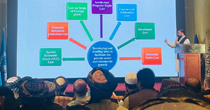 In response to growing global challenges such as environmental pollution, climate change, and associated health concerns, renewable energy is increasingly recognized as a vital solution. While Afghanistan's contribution to global greenhouse gas emissions is minimal due to limited industrial activity, it remains highly vulnerable to the adverse impacts of climate change. The promotion of renewable energy in the country is therefore both urgent and necessary.
To address this priority, the Renewable Energy Investment Business Forum was convened in Kabul on 24–25 June 2025, initiated by Afghanistan International Bank (AIB) in partnership with the United Nations Development Programme (UNDP). The forum brought together a diverse group of stakeholders, including foreign diplomats, representatives of international organizations, government ministries, banks/financial institutions, and members of the private sector and business community including associations.
Key Highlights and Outcomes:
1. Vast Investment Opportunities
o Afghanistan’s renewable energy sector—including solar, hydro, wind, and other green sources—presents significant untapped investment potential.
o The government has introduced a variety of incentives and facilities aimed at both domestic and international investors.
2. Banking Sector Readiness
o Afghan banks expressed readiness to finance renewable energy projects, especially through Islamic financing mechanisms backed by donor funds.
o Recent years have seen a 71% increase in financing across agriculture, industry, and energy sectors.
3. Supportive Regulatory Role
o Da Afghanistan Bank (DAB) reaffirmed its commitment to regulatory facilitation and oversight in support of Islamic finance-based energy investments.
4. Appeal to International Institutions
o Participants called for expanded credit guarantees and subsidy programs from international development partners to reinforce the domestic financial sector.
5. Government Support and Incentives
o The Afghan government has introduced targeted incentive packages to attract private investment and remains committed to supporting investors and entrepreneurs in the energy sector.
6. Enhanced Global Cooperation
o International actors continue to play a pivotal role in supporting renewable energy initiatives in Afghanistan, with pledges to deepen future collaboration.
7. Domestic Energy Imperative
o Afghanistan currently imports over 70% of its electricity, costing the country hundreds of millions of dollars annually.
o Developing local energy production through renewable sources is seen as a cost-effective and sustainable alternative.
8. Benefits of Renewable Energy Investment
o Key advantages include reducing air pollution, job creation, economic stabilization, and enhanced energy independence.
o Joint investments are encouraged as a strategic approach to mobilize capital and scale up project implementation.
9. Capacity Building and Skills Development
o A strong emphasis was placed on building human resource capacity through training and education programs tailored to the renewable energy sector.
This forum marks a significant step forward in aligning Afghanistan’s development agenda with global sustainability goals, unlocking new pathways for investment, innovation, and inclusive growth through renewable energy.

